


Business & Compliance
How To Handle Employee Misconduct Legally In India: A Guide For Employers
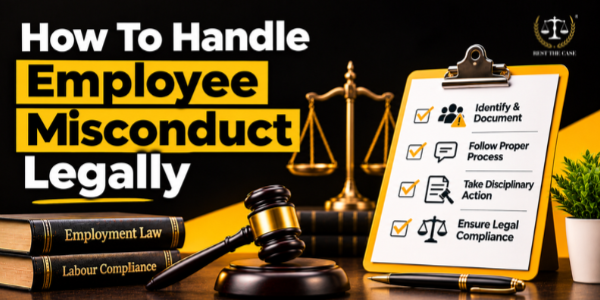

Employee misconduct can affect workplace discipline, business operations, and an organisation's reputation. Employers must handle such incidents carefully by following fair disciplinary procedures and applicable labour laws in India.
This blog explains how businesses can investigate misconduct, issue notices, conduct domestic inquiries, and take legally appropriate disciplinary action.
How Should Employers Handle Employee Misconduct? (Step-by-Step Process)
- Record the incident: Document the date, circumstances, people involved, and available evidence.
- Review applicable rules: Check the employment agreement, code of conduct, disciplinary policy, and relevant labour laws.
- Conduct preliminary assessment: Determine whether there is sufficient basis to investigate and whether immediate protective measures are necessary.
- Issue a notice: Send a show-cause notice or charge sheet explaining the allegations and allowing the employee to respond.
- Conduct a fair inquiry: Give the employee an opportunity to defend themselves and respond to the evidence, where an inquiry is required.
- Evaluate findings: Consider the evidence, employee's explanation, relevant past record and seriousness of the misconduct.
- Decide disciplinary action: Select a proportionate action supported by the findings and applicable legal requirements.
- Communicate the outcome: Issue a written decision and preserve investigation and disciplinary records.
What Counts as Employee Misconduct in the Workplace?
- Unauthorised absence: Remaining absent from work without approval or a valid explanation.
- Insubordination: Deliberately refusing lawful and reasonable instructions from authorised supervisors.
- Harassment: Engaging in workplace harassment, bullying or other prohibited behaviour.
- Fraud or theft: Stealing company property, falsifying records or engaging in dishonest activities.
- Policy violations: Deliberately violating workplace rules, safety requirements or disciplinary policies.
- Confidentiality breaches: Sharing or misusing confidential company information without authorisation.
- Minor misconduct: Isolated or less serious violations that may warrant counselling or warnings.
- Serious misconduct: Fraud, violence, harassment or other serious violations that may justify stronger disciplinary action.
Also Read: What Can I Do If I Face Sexual Harassment At The Workplace?
How to Investigate Employee Misconduct Fairly
- Preserve evidence: Collect relevant emails, attendance records, access logs, documents and witness statements.
- Maintain confidentiality: Restrict access to sensitive information and protect the identities of individuals involved.
- Appoint an impartial investigator: Select an independent investigator or inquiry officer where a formal inquiry is required.
- Inform the employee: Communicate the allegations clearly and provide a meaningful opportunity to respond.
- Examine evidence: Allow relevant evidence to be presented and examined according to applicable procedures.
- Maintain records: Document interviews, hearings, evidence, findings, and disciplinary decisions.
- Handle harassment complaints: Follow the POSH Act, 2013 procedure for sexual harassment complaints instead of replacing it with an ordinary HR investigation.
When Should an Employer Issue a Show-Cause Notice or Charge Sheet?
- Show-cause notice: Ask the employee to explain the alleged misconduct before the employer decides on further action.
- Charge sheet: Formally communicate specific misconduct allegations in disciplinary proceedings.
- Incident details: Include relevant dates, circumstances, alleged policy violations and supporting particulars.
- Response deadline: Specify how and by when the employee must submit their explanation.
- Reasonable opportunity: Allow sufficient time to respond, considering the applicable rules and circumstances.
- Objective assessment: Review the employee's explanation before deciding whether further disciplinary action is necessary.
Is a Domestic Inquiry Mandatory Before Disciplinary Action?
A domestic inquiry is a formal internal proceeding used to determine whether alleged employee misconduct has been established.
- Applicable requirements: Check whether standing orders, service rules, employment conditions, or applicable law require a formal inquiry.
- Notice of allegations: Clearly communicate the charges and supporting particulars to the employee.
- Impartial inquiry: Ensure the inquiry officer is unbiased and has no personal interest in the matter.
- Opportunity to defend: Allow the employee to present evidence, explain their position, and challenge relevant evidence.
- Evidence-based findings: Base the inquiry findings on the material and evidence presented during the proceedings.
- Procedural compliance: Follow the principles of natural justice and applicable disciplinary procedures.
What Disciplinary Action Can an Employer Take for Misconduct?
- Counselling: Address minor workplace violations through corrective guidance.
- Written warning: Issue a formal warning for misconduct or repeated policy violations.
- Final warning: Communicate the consequences of further misconduct where appropriate.
- Suspension: Temporarily suspend the employee where permitted by applicable law and employment rules.
- Demotion: Consider a change in position only where legally permitted and supported by applicable employment terms.
- Other disciplinary action: Apply legally permitted consequences in accordance with company policies and statutory requirements.
- Termination: Consider dismissal where misconduct is established and the required disciplinary procedure has been followed.
Can an Employer Suspend an Employee During a Misconduct Investigation?
Yes, an employer may consider temporary suspension where necessary to protect evidence, workplace safety, or the fairness of an ongoing inquiry.
- Reason for suspension: Identify whether suspension is necessary to protect the investigation or workplace.
- Legal authority: Check whether applicable law, standing orders, or employment rules permit suspension.
- Written communication: Record the reasons for suspension and communicate its terms to the employee.
- Subsistence allowance: Pay the applicable subsistence allowance within the prescribed timelines.
- Periodic review: Review the suspension regularly and avoid treating it as a final finding of guilt.
How Should Employers Handle Serious Misconduct Cases?
- Fraud or theft: Preserve transaction records, financial approvals, audit trails, and other supporting evidence.
- Harassment or abuse: Protect affected individuals, maintain confidentiality, and follow the applicable complaint procedure.
- Data breaches: Secure systems, preserve access logs, and assess legal and contractual notification obligations.
- Workplace violence: Take appropriate protective measures and contact authorities where necessary.
- Repeated insubordination: Review previous warnings, workplace communications and the employee's explanation.
- Unauthorised absence: Examine attendance records, prior communications and any explanation provided by the employee.
Employee Misconduct Handling Checklist for HR and Employers
Stage | Action to complete |
|---|---|
Incident reported | Record facts, date, and people involved. |
Initial review | Identify applicable rules and assess immediate risks. |
Evidence gathering | Preserve relevant documents and witness accounts. |
Notice issued | Communicate allegations and response deadline. |
Employee response | Review the explanation objectively. |
Formal inquiry | Conduct the required fair process. |
Findings recorded | Document evidence and conclusions. |
Disciplinary decision | Select a proportionate, legally permitted response. |
Outcome communicated | Issue the appropriate written decision. |
Records retained | Secure investigation and disciplinary documents. |
What Legal Risks Arise From Mishandling Employee Misconduct?
- Unfair disciplinary action: Employees may challenge decisions based on insufficient evidence or procedural unfairness.
- Employment disputes: Employers may face labour disputes, reinstatement claims, or other remedies where legally available.
- Financial liabilities: Procedural violations or unpaid statutory dues may result in compensation claims and penalties.
- Retaliation and discrimination: Unfair treatment or discriminatory disciplinary action may expose employers to legal claims.
- Confidentiality breaches: Improper handling of employee complaints or investigation records may create additional legal risks.
- Statutory protections: Company policies cannot override mandatory employee protections under applicable laws.
- Legal review: A documented and consistent disciplinary process, supported by legal advice, can help reduce disputes.
People Also Read
Conclusion
Handling employee misconduct requires proper investigation, documented evidence, and fair disciplinary procedures. Employers should avoid making decisions based solely on allegations and ensure that every action follows applicable employment terms and labour laws. A structured approach can help businesses reduce legal risks, maintain workplace discipline and prevent unnecessary employment disputes.
Disclaimer: This blog is for general informational and educational purposes only and does not constitute legal or professional advice. Laws may change, so readers should consult a qualified Corporate Lawyer for advice specific to their business and circumstances.
Frequently Asked Questions
Q1. Can an employer terminate an employee immediately for misconduct in India?
Not automatically. The employer must check applicable laws, employment terms and disciplinary procedures before deciding whether immediate termination is permitted.
Q2. Is a show-cause notice compulsory before taking disciplinary action?
It depends on the applicable legal framework, standing orders, service rules and the nature of the proposed disciplinary action.
Q3. How much time should an employee receive to respond to a misconduct notice?
There is no single response period for every case; the deadline should follow applicable rules and provide a fair opportunity to respond.
Q4. Can an employer suspend an employee while investigating misconduct?
Yes, where permitted by applicable law or employment rules, subject to prescribed procedures and subsistence allowance requirements.
Q5. What if an employee denies the allegations?
The employer should assess the employee's explanation against the available evidence and conduct the required inquiry before reaching a decision.

 Get Expert Advice and Solutions
Experienced lawyers for all legal matters wether it is for Family, Property, Criminal Cases, and More
Consult Now